
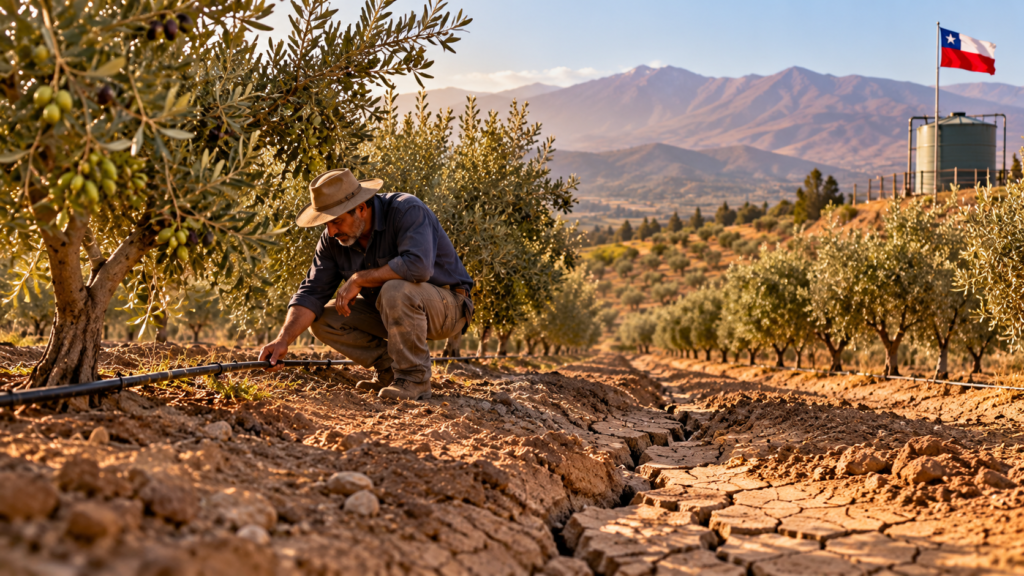
Chile’s olive oil production dropped 17 percent in 2026, falling to 16,600 metric tons as water scarcity and poor winter chill hours hit key growing regions, according to new data from the industry group ChileOliva.
The decline continues six seasons of swings between strong and weak harvests: average annual production over the past five years slipped to 17,820 tons, down from 21,700 tons in the previous five-year period, while Chile’s planted olive area shrank to roughly 19,700 hectares, down from more than 22,000 in 2018.
Climate Stress Hits Coquimbo Hardest
The Coquimbo region, about 400 kilometers north of Santiago and home to 16 percent of Chile’s olive groves, suffered the steepest declines as low winter chill accumulation and limited irrigation water held back the trees’ development, ChileOliva general manager Gabriela Moglia told Olive Oil Times. Results varied widely by producer: Olivos del Sur, Chile’s largest producer, reported a 28 percent production increase despite high summer temperatures and harvest-time frosts, while Alonso Olive Oil in the O’Higgins region produced 7.6 percent less oil but offset the drop with a higher extraction yield from better-quality fruit.
US Tariffs Open a Door for Tunisia
Despite the smaller harvest, Chile’s olive oil exports hit a record high in the first half of 2026, reaching nearly $35 million, up 32 percent year-on-year, with the United States and Brazil together accounting for 80 percent of export volume. A 12.5 percent US tariff imposed on Chilean olive oil in July 2026 has reshuffled competitive positioning in the American market. “This gives us an opportunity to compete with Spain, the main supplier of olive oil to the US,” said Olivos del Sur marketing head Claudio Lovazzano. “However, countries such as Tunisia and Morocco have gained greater market penetration thanks to lower tariffs or even zero tariffs.” For buyers sourcing Tunisian olive oil, this tariff gap is a real opening: as Spain and other major producers face higher US duties, Tunisian exporters with preferential access can offer more competitive landed costs without sacrificing quality.
Sponsored Placement
Reach international olive oil buyers and importers. Advertise your business right here.
FAQ
How much did Chile’s olive oil production fall in 2026? Chile produced 16,600 metric tons of olive oil in 2026, a 17 percent drop from the previous year, as water scarcity and low winter chill hours reduced yields in regions such as Coquimbo, according to the industry group ChileOliva.
Why are Tunisia and Morocco gaining ground in the US olive oil market? Since the United States imposed a 12.5 percent tariff on Chilean olive oil in July 2026 and maintains tariffs on Spanish oil, buyers have increasingly turned to Tunisia and Morocco, which benefit from lower or zero tariffs on olive oil exports to the US.
Source: Olive Oil Times
Sponsored Placement
Reach international olive oil buyers and importers. Advertise your business right here.