
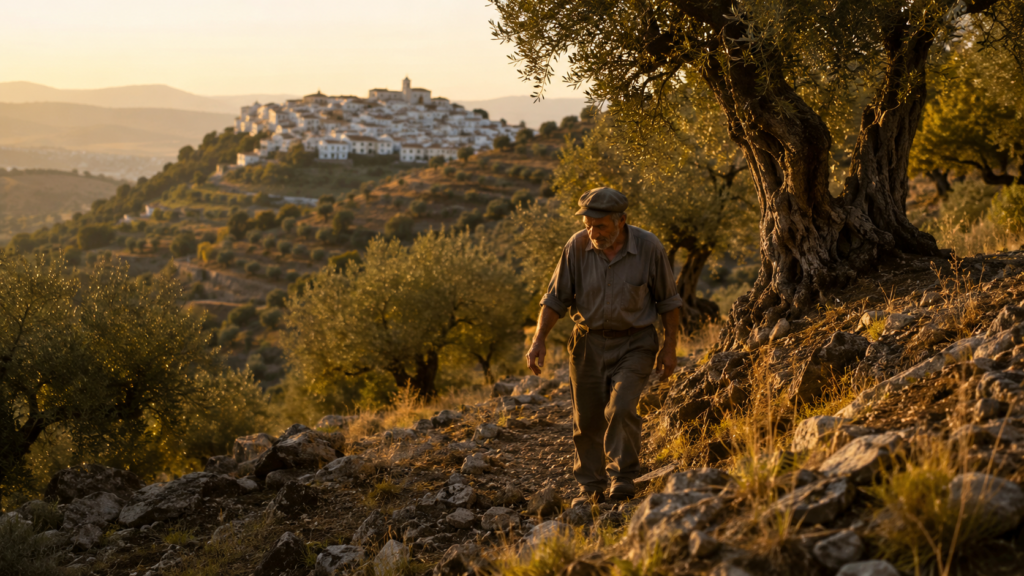
Spain’s Andalusia region, the world’s largest olive oil-producing area, is studying new financial aid and tax relief for traditional, non-mechanized olive groves struggling to cover rising production costs, regional authorities confirmed on August 31, 2026, as part of an update to Andalusia’s olive sector strategy.
What the New Studies Would Cover
The Andalusian regional government said new studies are underway to examine assistance and financial aid for traditional and mountainside olive groves that cannot be mechanized because of their terrain, as well as a related program for groves that face particular economic challenges while providing high environmental value. The initiative traces back to Spain’s Common Agricultural Policy Strategic Plan and draws on cost data published by the Spanish Association of Olive-Growing Municipalities (AEMO). Farm group COAG has pushed for further reform, calling for aid calculations to incorporate ten years of historical data alongside current economic variables, including the gap between production costs and market prices — a gap that has widened for many small, traditional producers in recent seasons.
Why Traditional Groves Are Under Pressure — And Why It Matters to Buyers
Cooperativas Agro-alimentarias de Andalucía, the region’s largest farming association, has publicly urged Spain’s government and the European Union to take urgent action to support the olive sector. Olive growing is Spain’s largest agricultural activity by number of farms, spanning almost a quarter of a million holdings concentrated heavily in Andalusia, and traditional rain-fed groves carry outsized environmental value: Spain’s Ministry of Agriculture, Fisheries and Food counts roughly 180 bird species, 60 ant species, 200 wild bee species and more than 750 plant species living in the country’s olive groves — about a fifth of all species in those groups found on the Iberian Peninsula — while the groves also help control erosion on the steep, lower-yielding terrain where many of them grow. For buyers who source from Tunisia, the cost squeeze on Spain’s traditional groves is a reminder that even the world’s top olive oil producer faces real pressure within parts of its own industry, a factor worth weighing when comparing quoted prices across origins, including Tunisian Olive Oil Trade’s own network of Tunisian suppliers.
Sponsored Placement
Reach international olive oil buyers and importers. Advertise your business right here.
FAQ
What is Andalusia doing to support traditional olive groves? The Andalusian regional government is studying new financial aid and tax measures for traditional, non-mechanizable olive groves facing high production costs, as part of an update to its regional olive sector strategy confirmed on August 31, 2026.
Why are traditional Spanish olive groves struggling financially? Many traditional and mountainside groves in Spain cannot be mechanized, so their production costs are far higher than modern intensive groves, while market prices often fail to cover those costs — a gap farm groups such as COAG say needs updated, more accurate calculation methods.
Source: Olive Oil Times
Sponsored Placement
Reach international olive oil buyers and importers. Advertise your business right here.