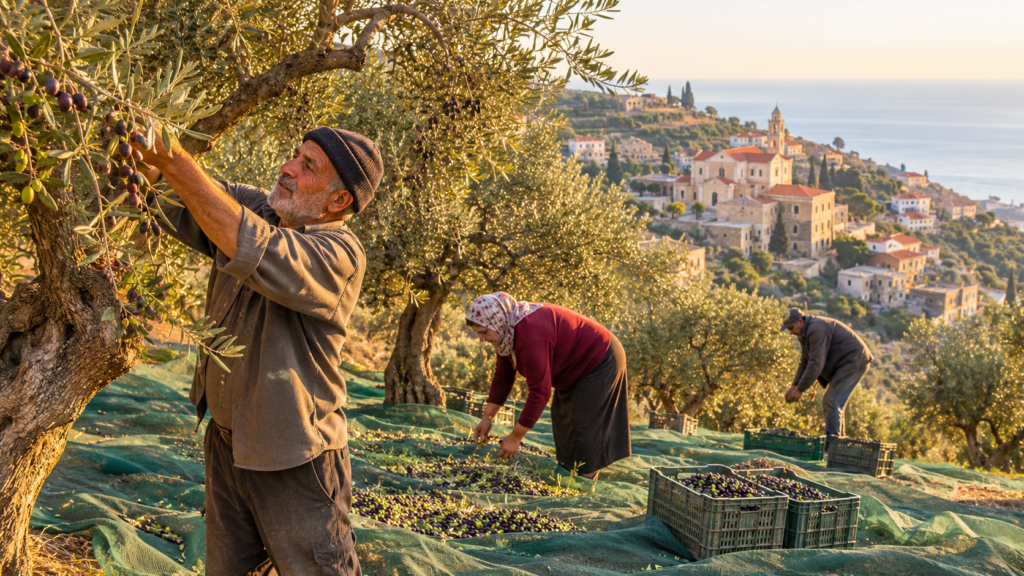
Lebanon expects to produce about 30,000 tons of olive oil in the 2026/27 crop year, according to the High Agricultural Council and the Ministry of Agriculture, but producers warn that rising costs, conflict damage and export barriers threaten the recovery. The harvest is forecast to exceed last season’s by more than 30 percent, which would bring output back to the level the International Olive Council recorded for 2022/23.
Why Lebanon’s olive harvest is rebounding
Officials say oil yields have improved as the harvest has progressed. Groves in southern Lebanon traditionally account for 30 to 40 percent of national olive production, but farmers there have been severely affected by Israeli military operations: according to figures presented by Agriculture Minister Nizar Hani in late October, about 56,000 hectares of agricultural land in the south have been affected. Hani has called for a national initiative to support growers, safeguard quality and combat fraud, and he met International Olive Council officials in Madrid in October. The ministry has also distributed battery-powered harvesting equipment to growers.
Costs and export barriers facing Lebanese producers
Karim Arsanios, founder of the award-winning producer Solar in northern Lebanon, says labor costs rise by about 30 percent every year and that he employs 40 workers for three weeks at harvest. He also reports a roughly 35 percent increase in transport costs from fuel surcharges, tariffs and other shipping expenses. Solar exports limited quantities to the United States, France and the United Kingdom by air freight, shipping about 400 to 500 bottles at a time, since sea freight is generally more economical only for larger volumes. For buyers sourcing from Tunisia, the story is a reminder that small-lot premium supply in the Mediterranean is under cost pressure, while Tunisian Olive Oil Trade connects importers with Tunisian suppliers for bulk orders — see our bulk buying page.
Sponsored Placement
Reach international olive oil buyers and importers. Advertise your business right here.
FAQ
How much olive oil will Lebanon produce in 2026/27?
The Lebanese High Agricultural Council and Ministry of Agriculture forecast about 30,000 tons of olive oil for 2026/27, more than 30 percent above the previous harvest and back to the 2022/23 level recorded by the International Olive Council.
Why is Lebanese olive oil getting more expensive to produce and export?
Producers cite labor costs rising about 30 percent a year, a roughly 35 percent rise in transport costs, inflation and fuel prices, plus conflict damage in southern Lebanon, where Israeli operations affected about 56,000 hectares of farmland.
Source: Olive Oil Times (23/11/2026)
Sponsored Placement
Reach international olive oil buyers and importers. Advertise your business right here.