
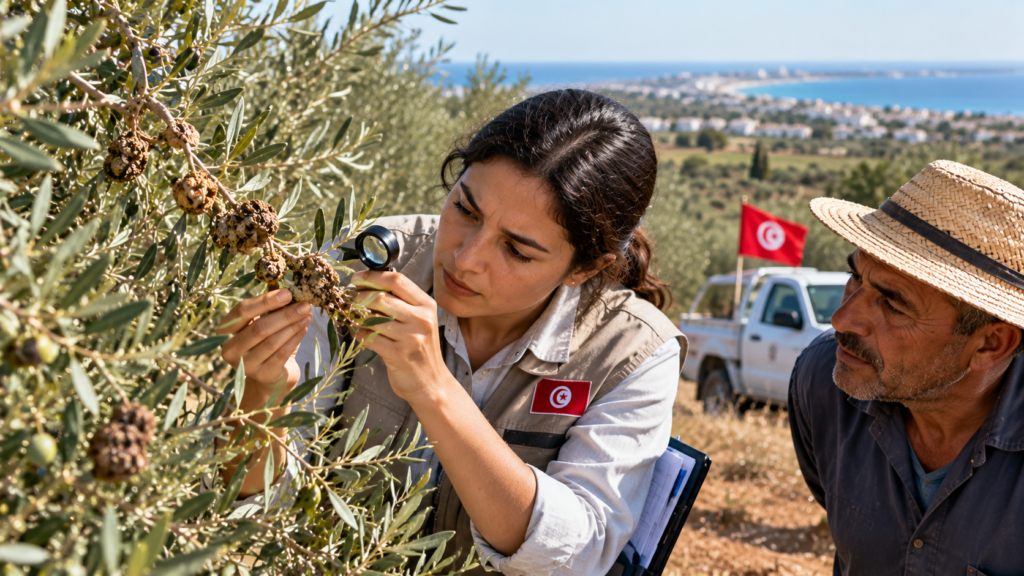
Tunisia’s Ministry of Agriculture moved quickly on October 15, 2026, launching emergency containment measures and a nationwide monitoring plan after confirming olive knot disease in groves in the Melloulech delegation of Mahdia governorate.
How Tunisia Is Responding to the Mahdia Olive Disease Case
The infection is caused by the bacterium Pseudomonas savastanoi pv. savastanoi, which produces knot-like galls on olive tree branches and trunks that can weaken trees and reduce their yield over time. There is no reliable cure once a tree is infected, so Tunisian agricultural teams are focused on prevention and containment: pruning infected branches, burning the removed plant material on site, and applying preventive treatments to healthy trees nearby. Technical teams have been working in the affected areas of Mahdia since the end of September 2026, and the ministry has now deployed regional monitoring teams to every olive-producing governorate in the country to catch any further spread early.
Context: A Normal Seasonal Dip, Not a Crisis
It’s worth separating this disease case from Tunisia’s broader 2026/27 production outlook. Industry groups, including the National Chamber of Olive Producers, already expect olive oil output this season to fall to around 300,000 tonnes from last year’s record 500,000 tonnes, a decline attributed mainly to the olive tree’s normal biennial rest cycle rather than disease or drought, with some industry voices noting that firmer global prices could help cushion export revenue even with a smaller crop. Reporting on the Mahdia case is explicit that the disease outbreak is not considered the primary driver of that forecast, and the authorities have not yet disclosed how much area the infection covers or estimated any additional losses it might cause. For buyers sourcing bulk olive oil from Tunisia, the swift, nationwide monitoring response is itself a reassuring sign of how closely Tunisia’s agricultural authorities track crop health, and vetted Tunisian suppliers can confirm whether their groves fall within any affected zones as part of standard due diligence.
Sponsored Placement
Reach international olive oil buyers and importers. Advertise your business right here.
FAQ
What is olive knot disease, and where was it found in Tunisia? Olive knot disease is a bacterial infection caused by Pseudomonas savastanoi pv. savastanoi that forms knot-like growths on olive tree branches and trunks; Tunisia’s Ministry of Agriculture confirmed a case in Mahdia governorate’s Melloulech delegation and launched an emergency response on October 15, 2026.
Will the Mahdia olive disease affect Tunisia’s overall 2026/27 harvest? Not primarily — reporting on the outbreak is explicit that it is not considered the main driver of this season’s already-expected production decline, which industry groups attribute mainly to the olive tree’s normal biennial cycle, and authorities have not disclosed how much area the disease affects.
Source: Webdo and Ecofin Agency
Sponsored Placement
Reach international olive oil buyers and importers. Advertise your business right here.