
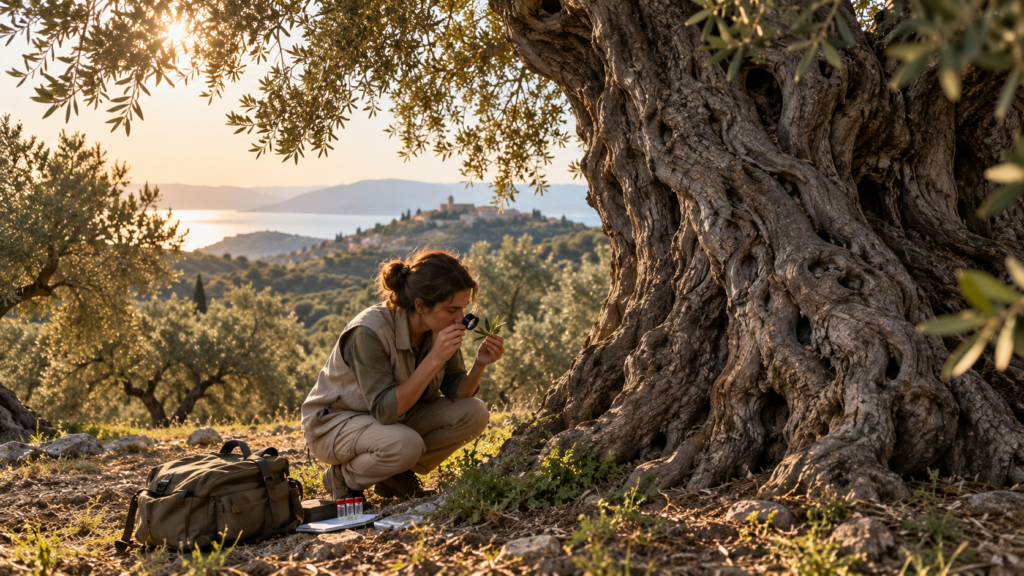
Researchers analyzing ancient olive trees in Calabria and Basilicata, in Southern Italy, have found far more genetic diversity than expected, identifying 114 distinct genetic profiles that do not match any cultivar in international reference databases.
The study, published in the journal Frontiers in Plant Science and first reported by Olive Oil Times on September 16, 2026, analyzed 347 olive trees across the two regions, including 172 monumental specimens, some of which have survived for centuries. Researchers say the findings reveal a previously undocumented reservoir of olive biodiversity that could help the industry face future challenges.
What the Study Found
Using molecular markers, the research team traced the trees’ maternal lineages and reproductive compatibility, and compared the genetic makeup of canopies and rootstocks to uncover evidence of centuries-old grafting practices. They identified two major maternal lineages: E1, linked to the Eastern Mediterranean and common among cultivated olives, and E2, associated with indigenous Central-Western Mediterranean wild olive populations. The team also found a striking regional difference in reproductive compatibility groups, with one group dominant in Basilicata and the opposite pattern in Calabria, along with three trees showing signs of unusual “putative polyploidy,” a rare genetic condition not typically seen in cultivated olive. “We expected to find a rich biodiversity, not up to those numbers though,” said Thomas Vatrano, an agronomist and co-author of the study, in comments to Olive Oil Times. “It is a genetic potential that could also hold solutions to some of the challenges faced by the olive sector today.”
Why It Matters for Olive Oil’s Future
With climate change, water stress and the spread of the bacterial pathogen Xylella fastidiosa threatening groves across the Mediterranean, researchers argue this hidden genetic material could become a valuable resource for breeding programs aimed at drought tolerance and disease resistance. Vatrano, who has studied Calabria’s olive biodiversity for about 15 years, said the next step should be to establish a germplasm field collection to preserve and evaluate the newly identified material before it is lost. For buyers sourcing Tunisian olive oil, the discovery is a useful reminder that Mediterranean olive varieties grown for generations in hot, drought-prone conditions, much like Tunisia’s own groves, often carry genetic resources that could matter more as growers everywhere adapt to a changing climate. Buyers looking to source oil from well-documented, resilient Tunisian varietals can connect directly with our network of vetted Tunisian suppliers.
Sponsored Placement
Reach international olive oil buyers and importers. Advertise your business right here.
FAQ
What did researchers discover about ancient olive trees in Italy?
Researchers analyzing 347 ancient and monumental olive trees in Calabria and Basilicata found 114 genetic profiles that do not match any known cultivar, revealing a previously undocumented reservoir of olive biodiversity, according to a study published in Frontiers in Plant Science in September 2026.
Why does olive tree genetic diversity matter for the olive oil industry?
Greater genetic diversity gives breeders and researchers more raw material to develop olive varieties that resist drought, climate stress and diseases like Xylella fastidiosa, which has already devastated groves in parts of Southern Italy.
Source: Olive Oil Times
Sponsored Placement
Reach international olive oil buyers and importers. Advertise your business right here.