
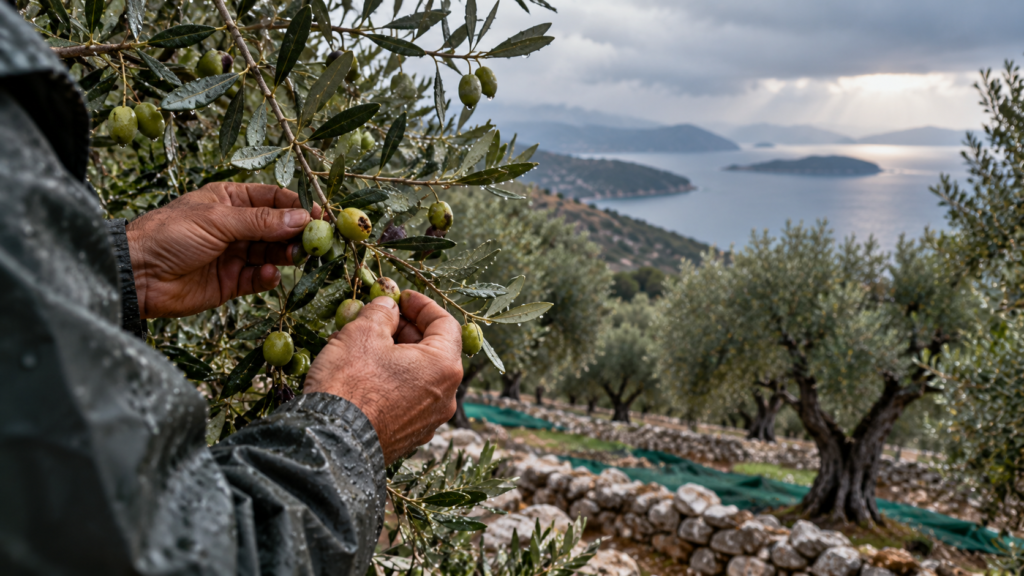
Croatian olive growers are choosing between spraying against the olive fruit fly and moving up their harvest, after September rains reactivated the pest following a summer of extreme heat and drought. The debate, unfolding across Istria and Dalmatia, shows how insect pressure, irrigation choices and harvest timing interact to determine both yield and the quality of the resulting oil. Advisers in Istria have reported high olive fruit fly (Bactrocera oleae) populations and recommended treatment, while growers in Dalmatia argue that spraying so close to harvest can do more harm than the fly itself.
Why the Fly Came Back After the Rain
The olive fruit fly needs humidity and temperatures below about 30°C to complete its life cycle, conditions that returned to Croatia’s coast on September 10 and 11 after months of drought had suppressed the pest. Šime Marcelić, an associate professor at the University of Zadar who tends a 400-year-old family grove on the island of Ugljan, said growers who irrigated and plan to harvest in late October or November face the greatest risk, since the fly needs about 30 days to complete its cycle. Non-irrigated groves being picked in the first half of October are less exposed, he said, while coastal areas and islands, and neglected groves nearby, tend to see higher pest pressure than inland regions such as Ravni Kotari, Bukovica and northern Istria.
Chemical Sprays, Clay Coatings, or an Earlier Harvest
Istrian advisers have recommended deltamethrin- or flupyradifurone-based treatments with short preharvest intervals, while some growers are testing kaolin clay, zeolite and wood charcoal distillate as lower-residue alternatives. Dr. Ivica Vlatković, a physician and olive grower in Novigrad, said charcoal distillate confuses the flies without harming beneficial insects, but warned it must be applied at least three weeks before harvest or its odor can carry into the oil; he added that clay coatings applied too close to picking can also end up in the oil if not washed off thoroughly at the mill. Many growers are concluding that bringing the harvest forward, rather than spraying late in the season, is now the more practical way to protect fruit quality. For buyers sourcing Tunisian olive oil, the episode is a reminder that harvest timing and pest pressure directly affect both yield and sensory quality — a reason to ask suppliers when and how their groves were picked, not just where they are grown.
Sponsored Placement
Reach international olive oil buyers and importers. Advertise your business right here.
FAQ
What is the olive fruit fly and why does it matter for olive oil quality? The olive fruit fly (Bactrocera oleae) lays eggs inside olives, and the resulting larvae damage the fruit and can raise the oil’s acidity, so heavy infestations can lower both yield and extra virgin quality.
Why are some Croatian growers choosing not to spray before harvest? Growers such as Ivica Vlatković argue that treatments applied too close to picking, including clay coatings and pesticides, can leave residue or odor in the fruit, so many are opting to harvest earlier instead of treating groves late in the season.
Source: Olive Oil Times
Sponsored Placement
Reach international olive oil buyers and importers. Advertise your business right here.