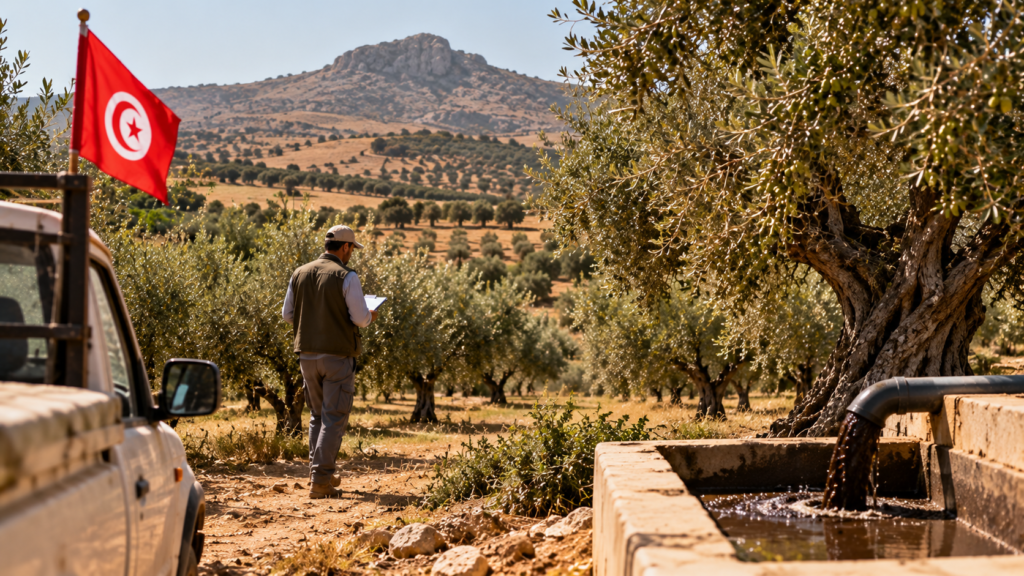
Agricultural authorities in Tunisia’s Zaghouan region are tightening field monitoring of the 2025/2026 olive harvest while pushing growers to recycle olive mill wastewater, known locally as margine, as a natural fertilizer for olive groves. The push came out of a working session held Thursday, September 25, at the regional agricultural development office (CRDA) in Zaghouan, covering the state-recovered farmland that makes up a significant share of the region’s olive and major-crop acreage. Officials stressed that these state lands play a strategic role in Tunisia’s food security and national agricultural production goals.
Turning Olive Mill Waste Into Fertilizer
Officials called on Zaghouan’s Office of State Lands to get involved in valorizing margine — the liquid byproduct left over from pressing olives into oil — by spreading it on olive plantations, citing its positive effect on yield. Making that happen requires coordination between the regional authority and local mill owners to organize the spreading operation across state-managed groves. The session also pushed for faster soil analysis results from the National Institute of Major Crops so growers can pin down exactly what fertilizer each plot needs ahead of the 2025/2026 season.
Harvest Timing, Pricing and Oversight
The meeting also set out pricing for olive and almond pruning work, and outlined plans to auction olive harvests directly off the trees through public tenders on state farmland. Officials flagged 10,000 bales of wheat straw at the Souiniyat 1 farm for a damage assessment and resale, and called for stronger security action against unauthorized encroachment on state agricultural land. For buyers sourcing Tunisian olive oil, this kind of coordinated, state-supervised monitoring — from soil testing to waste recycling to harvest-time oversight — is part of what underpins consistent quality and traceability across Tunisia’s olive-growing regions, including state-managed land like Zaghouan’s.
Sponsored Placement
Reach international olive oil buyers and importers. Advertise your business right here.
FAQ
What is margine and why is Tunisia recycling it as fertilizer? Margine is the liquid byproduct left over from pressing olives into oil; when properly managed and spread on olive groves, it can improve soil fertility and boost yields, which is why Zaghouan’s agricultural authorities are encouraging mills and state land managers to valorize it rather than discard it.
How is Tunisia organizing the sale of its olive harvest on state farmland? Regional authorities in Zaghouan plan to auction olive crops directly on the trees through public tenders, alongside set pricing for pruning work, as part of a broader push to formalize how olives are harvested and sold from state-recovered agricultural land.
Source: AgroVisium
Sponsored Placement
Reach international olive oil buyers and importers. Advertise your business right here.